Nothing rattles a first-time visitor to Hanoi quite like the first busy intersection. A thousand motorbikes flow in every direction with no apparent gaps, and standing on the kerb waiting for one feels like waiting for the tide to stop. Here's the secret locals learn as children: you don't wait for a gap. You become predictable, and the traffic flows around you like water around a stone. Master this and the whole city opens up.
1. Why It Looks Like Chaos (But Isn't)
Hanoi traffic is not random — it's a self-organising system built on eye contact and constant small adjustments. Motorbike riders are travelling slowly, watching everything, and expecting pedestrians in the road. Unlike Western traffic, where cars move fast and assume the road is theirs, here the default assumption is that people, bikes and carts share the same space and negotiate it continuously. Once you understand that riders are actively planning to avoid you, the wall of bikes stops looking like a threat and starts looking like a current you can step into.
 New
⏱️ 2 Hours
Hanoi Jeep City Highlights Tour | 2 Hours
2. The Golden Rule: Slow, Steady, Predictable
This is the whole technique in one line: walk at a slow, constant pace and never stop suddenly or dart. Step off the kerb calmly and keep moving at the speed of a relaxed stroll. Riders read your speed and trajectory and adjust to pass behind you. The danger isn't moving into traffic — it's the unpredictable jerk, the sudden sprint, or the panicked freeze in the middle, all of which break the rider's plan. Trust the system, commit to your line, and let them do the swerving.
 Best Seller
⏱️ 4 Hours
 Best Seller
⏱️ 4.5 Hours
3. What to Do With Your Hands, Eyes and Phone
Put the phone away — crossing is a two-eyes-up task. Make gentle eye contact with oncoming riders so they know you've seen them, and hold a hand out flat, palm-down, as a soft signal that you're crossing. Scan continuously toward the direction traffic is coming from rather than staring at your feet. You don't need to be aggressive; a calm, visible presence does all the work. Keep your body language smooth and your movements telegraphed, and the flow simply parts.
 Popular
⏱️ 4.5 Hours
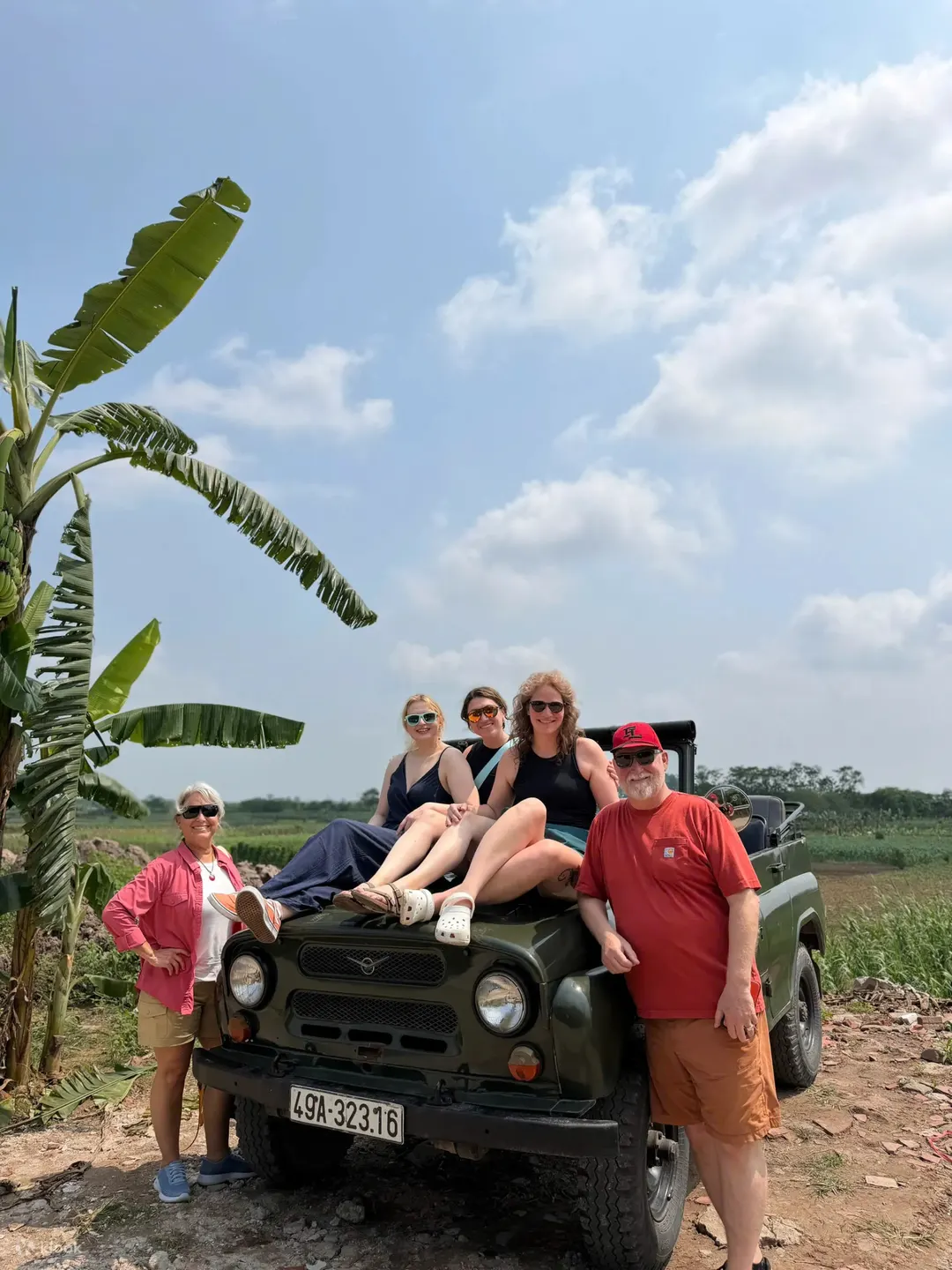
Hanoi Countryside Jeep Tour to Co Loa
4. Motorbikes, Cars and Buses Are Not the Same
Motorbikes will flow around you; cars and buses will not. Larger vehicles are less nimble and have real blind spots, so give them clear right of way and never step out in front of one assuming it can dodge like a scooter. At bigger junctions, cross behind cars and let the bikes weave around you. Buses in particular pull in and out abruptly — treat them the way you'd treat traffic back home. The rule of thumb: negotiate with two wheels, yield to four.
 Popular
⏱️ 4.5 Hours
 Popular
⏱️ 8 Hours
5. Where to Practise First (and Where Not To)
Start on the quieter Old Quarter lanes where speeds are low and you can build confidence. The pedestrianised weekend zone around Hoan Kiem Lake is effectively car-free and perfect for finding your feet. Avoid making your first attempt at a large multi-lane boulevard in the French Quarter or a roundabout during rush hour. Zebra crossings and the occasional pedestrian light exist but are treated as suggestions, so use the same slow-and-steady technique even when the light is green — and follow a local across if one is heading the same way.
6. Crossing With Kids, Luggage or Reduced Mobility
The technique still works, but give yourself margin. Hold children firmly on the traffic-facing side and cross as one calm unit. With a wheelie suitcase, keep it tucked beside you rather than trailing where a rider can't see it. If you have limited mobility or simply don't fancy it, don't force it — wait for a local group and cross in their slipstream, or hop in a Grab for the tricky stretch. And if you'd rather skip the intersections altogether on a sightseeing day, an open-air jeep lets you take in the whole city from an elevated seat while someone else reads the traffic for you.
7. Frequently Asked Questions
Q: Do I really just walk into the traffic?
A: Yes — slowly and at a constant pace. Riders are moving slowly and expect you; the danger is stopping suddenly or sprinting, which breaks their plan to avoid you.
Q: Are the pedestrian crossings safe to rely on?
A: Treat them as guidance, not a guarantee. Use the same slow, predictable technique even on a green light, and follow locals across when you can.
Q: What if I'm just too nervous?
A: That's completely normal on day one. Practise on quiet lanes and the car-free lake zone, use Grab for big roads, or see the city by open-air jeep and let your guide handle the traffic.